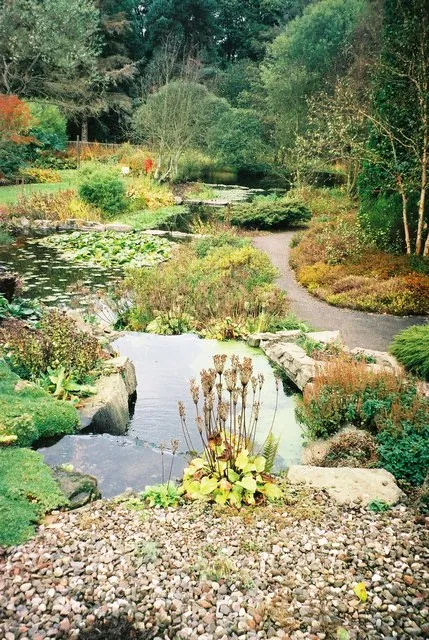
St Andrews Botanic Garden is an 18-acre garden on the banks of the wooded Kinness Burn, in the Canongate area on the southern edge of the town, about a kilometre from the centre.
It is supported by the University of St Andrews and Fife Council, and by admission charges.
The garden has changed significantly in recent years, and the change is the single most important thing to know before you visit.
The traditional botanic-garden elements — the extensive heated glasshouses full of exotics, the intensively cultivated formal beds — have been substantially reduced. In their place the garden has moved towards naturalistic planting, biodiversity, meadow and wildlife habitat, with more of the site given over to wilder management.
What is there now:
A rock garden and peat garden.
Ponds and a water garden along the burn.
Woodland walks and mature trees.
Order beds and a herbaceous area.
Glasshouses, reduced from their former extent, with tropical and temperate collections.
Meadow and wildflower areas — a substantial part of the site.
A butterfly house in season.
This needs stating honestly, because the reviews split hard and both camps are describing the same garden.
The negative view, and it is strongly felt: visitors who remember the old botanic garden — the hot houses, the exotic collections, the cultivated displays — find what is there now a considerable disappointment, and some describe it as one of the saddest botanic gardens they have visited. The specific complaints are the loss of the glasshouse collections, areas that read as unkempt rather than naturalistic, and an admission charge that feels high for what is on offer when many Scottish public parks are free and better planted.
The positive view: it is a pleasant, quiet, varied 18 acres with plenty of places to sit in sun or shade, mature trees, the burn running through, and areas where nature has genuinely been allowed to take over. On a warm day, as a place to spend an hour, it is enjoyable.
A practical warning: if you have grass allergies, the meadow management makes this a difficult garden in summer. Visitors have said so specifically.
Go with current expectations, not with a memory of what it was, and check the garden’s own website for what is currently open — the glasshouse position in particular changes.
Admission charged per adult, with children and concessions less. Free to Friends of the garden.
Time: an hour to ninety minutes.
Facilities: café, shop, toilets. Plenty of benches.
Access: paths are largely surfaced with some slopes; the burn-side sections are less even.
Season: open year-round with seasonal hours. Spring and early summer are much the best.
Getting there: Canongate, about a kilometre south of the town centre — fifteen minutes’ walk, or by bike, with parking on site.
Kinness Burn and the Lade Braes, a wooded walk following the burn from the town out towards Cockshaugh Park — free, lovely, and one of the best short walks in St Andrews.
Craigtoun Country Park is three kilometres further out and is the better option with children.
The town centre is fifteen minutes’ walk.
Yes, but substantially reduced from their former extent. The large exotic collections that older visitors remember are largely gone.
Because the garden has moved from intensive horticultural display towards naturalistic and biodiversity planting, which some visitors welcome and others regard as a loss.
Admission is charged per adult, and some visitors consider it high for what is currently there.
No — the meadow management makes it difficult for anyone with grass allergies in summer.
Yes — the Lade Braes walk along the Kinness Burn is free and is one of the nicest walks in the town.